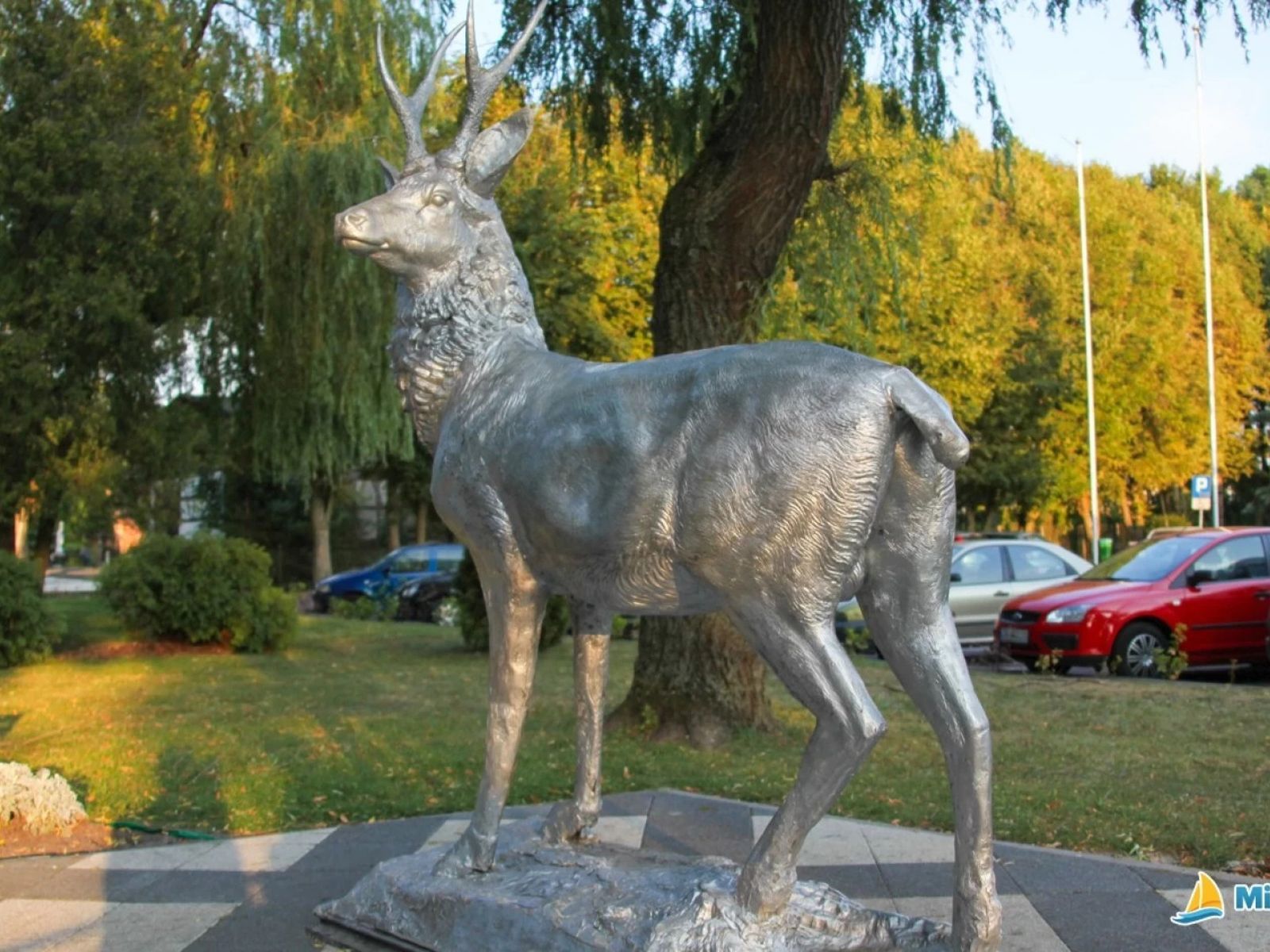
The Stag Monument in Mielno is one of the most recognisable sculptures of the resort and its unofficial symbol. A life-size metal figure of a stag stands on a small square in front of the Commune Office at ul. Bolesława Chrobrego 10, in the very centre of the town.
History of the sculpture — from the hunt to the symbol of Mielno
The beginnings of the monument go back to the second half of the 19th century. Baron von Versen, the owner of the estate in Krępa near Koszalin, shot a magnificent stag with an imposing twelve-point antler during one of the forest hunts. To commemorate this event, he commissioned a life-size sculpture of a stag to be cast in a foundry in Potsdam. The finished figure was placed above a pond in the palace park in Krępa.
In February 1945, in the face of the approaching front, the residents of Krępa were evacuated and the palace burned down. The sculpture survived — it had previously been moved in front of the blacksmith’s house. Around 1946 the stag arrived in Mielno, where it initially stood in the former spa park at ul. 1 Maja. When the park grounds passed into private hands, the figure was moved to its current location in front of the Commune Office.
Devastations and rebirths of the monument
The history of the monument is also a story of repeated acts of vandalism. In 1996 the sculpture was seriously damaged — vandals broke off the legs and cut off the head of the figure. The reconstruction was coordinated by Ryszard Ignaczak, an employee of the local sports centre and an avid hunter, who obtained sculptural moulds and commissioned a new casting. To this day, tourists regularly break the antlers of the stag, which forces further repairs and renovations.
Mandatory photo with the stag
The Stag Monument is one of those points on the map of Mielno that almost every tourist visits. Taking a photo with the stag has become a kind of tradition of holiday stays in the resort. The sculpture stands near the promenade, which makes it easy to incorporate a visit into a walk through the centre. For lovers of local history and city attractions, it is a mandatory stop — small, but full of stories reaching back more than a hundred years.
Price
Free entry — publicly accessible attraction without tickets.